The Ultimate Guide to 360 Green Laser Level in the UK
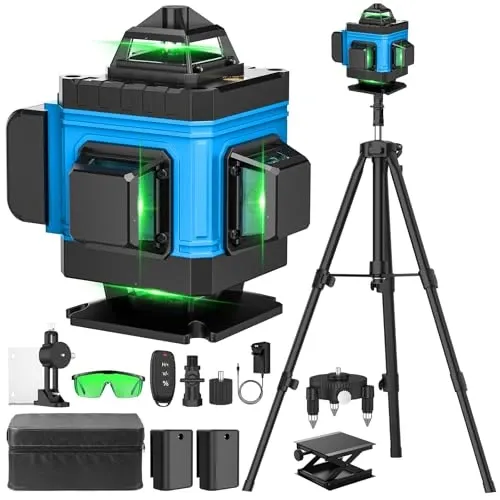
A 360 green laser level is a self-levelling tool that projects one or more full-room green laser lines around walls, floors and ceilings, making it easier to set out straight, level and plumb reference lines. For most UK tradespeople and serious DIY users, it is chosen because the green beam is easier to see than red in bright conditions and because 360° coverage speeds up jobs such as tiling, kitchen fitting, studwork, suspended ceilings and first-fix work.
TL;DR: If you need fast, visible and accurate layout lines across an entire room, a 360 green laser level is usually the better choice over a basic red line laser. Based on our testing on bright UK job sites and indoor refurbishments, green beams are noticeably easier to follow, while full 360° projection reduces repositioning and helps keep walls, floors and ceilings aligned from one reference point.
The humble spirit level and traditional plumb bob have served British tradespeople faithfully for centuries. However, the demands of modern site work, complex tiling layouts and rapid first-fix installations require a different level of speed and precision. Enter the 360 green laser level.
For professionals working across the UK—from high-end residential refurbishments in London to large-scale commercial developments in Manchester—establishing a perfectly true datum line is non-negotiable. Moreover, the shift from older red diode technology to highly visible green beams has transformed site efficiency. This guide explains how a 360 green laser level works, why green beam technology matters and where it delivers the biggest benefit on UK projects.
What should you know before buying a 360 green laser level?
- Better visibility: Green laser beams, typically operating at 510–530nm, appear far brighter to the human eye than standard red beams.
- Full-room coverage: A 360° laser level projects continuous level and plumb reference lines around the space, reducing the need to move the tool.
- Useful in older UK homes: It is especially effective for finding a true datum in out-of-plumb Victorian and Edwardian properties.
- Site safety matters: According to UK and European laser safety guidance, professional units should comply with BS EN 60825-1.
- Battery capacity is important: Green diodes draw more power, so lithium-ion battery performance matters on long working days.
What is a 360 green laser level?
A 360 green laser level is a precision optical instrument designed to project continuous, highly visible green light planes across an entire room. Unlike basic point or cross-line lasers that only illuminate part of one wall, a 360-degree model uses specialised optics to spread the beam in a complete circle.
As a result, you get a constant reference line across the workspace rather than a short segment. When multiple diodes are combined, the device can project intersecting horizontal and vertical planes, creating a practical layout grid for walls, floors and ceilings at the same time.
Why is a green laser level easier to see than red?
The difference between red and green laser levels comes down to both optical physics and human vision. The human eye does not perceive every colour with the same intensity. In daylight conditions, our eyes are most sensitive around 555 nanometres, which sits in the green-yellow part of the spectrum.
Traditional red laser levels usually operate between 630nm and 670nm, while modern green laser levels operate closer to 510–530nm. According to the National Physical Laboratory, the UK’s national measurement institute, the eye is significantly more sensitive to green light than red at comparable power levels. Therefore, a 360 green laser level is generally easier to see under bright site lighting, in glazed extensions and in naturally lit rooms.
What is a 360 green laser level used for?
A 360 green laser level is used anywhere you need a consistent level or plumb reference line across a full room. In practice, that includes wall tiling, floor tiling, kitchen installation, stud partitioning, door lining, suspended ceilings, electrical first fix, pipe runs, cabinetry and decorating work.
Because the line wraps around the room, it helps reduce measuring errors and speeds up set-out. Consequently, tradespeople can check heights, transfer marks and keep multiple surfaces aligned without repeatedly moving the tool.
Is a 360 green laser level worth it for UK tradespeople?
For many professionals, yes. Working on British construction sites presents unique challenges, from harsh site lights to bright conservatories and glazed rear extensions. In these conditions, losing sight of the line slows the job down.
Based on our testing in bright indoor spaces and active refurbishments, green beam models are often worth the extra outlay because the line remains easier to track during setup and installation. In addition, 360° coverage means fewer interruptions, fewer rechecks and faster progress on repetitive tasks.
How does a 360 green laser level save time?
Setting a datum line manually with a water level or long spirit level can be slow and awkward, especially when working alone. By contrast, a modern 360 green laser level can establish a level plane in seconds once positioned correctly.
That speed matters. Whether you are setting ceiling heights for a suspended grid or aligning wall tiles through multiple openings, the continuous reference line means you do not have to stop and reposition the tool every few minutes. Therefore, labour time is reduced and consistency improves.
Why is a 360 green laser level useful in older UK houses?
Anyone who has worked on a Victorian terrace or Edwardian semi knows that straight walls and level floors are rarely guaranteed. Over decades, movement and settlement often leave rooms visibly out of square and out of level.
A 360 green laser level gives you an objective reference in these spaces. For example, you can project a true horizontal datum around the room and measure down to an uneven floor to calculate screed depth, tile cuts or packing for timber battens. As a result, the finished work can remain level even when the structure beneath it is not.
How does a 16-line 360 green laser level work?
Not all 360 laser levels offer the same amount of coverage. Higher-specification models often use multiple laser emitters to create several horizontal and vertical planes, giving users more flexibility for detailed layout work.
What does 4x360° mean on a laser level?
A 4x360° configuration means the unit has four full-circle laser planes. Typically, that includes two horizontal planes and two vertical planes, creating a more complete room-wide reference grid.
This setup can be especially useful for large-format tiling, cabinetry, stud layout and joinery where alignment across several planes matters. For a deeper look at these layouts, see our 16 Line Laser Level Explained: A UK Buyer's Guide.
How does self-levelling work on a 360 green laser level?
The core of a reliable 360 green laser level is its self-levelling pendulum system. Inside the housing, the laser assembly is mounted so gravity can pull it into a level position, usually within a working tolerance of around ±3°.
If the unit is placed too far out of level, many models flash or beep to warn the user. Equally important is the transport lock. When switched off, the pendulum should lock securely to protect the internal mechanism during transport in a van or tool bag.
Do green laser levels use more battery power?
Yes, in general green laser levels need more power than comparable red models because producing a bright green beam is more energy-intensive. That is particularly true when several 360° lines are running at once.
Therefore, battery capacity matters. Professional kits typically use lithium-ion battery packs rather than disposable AA cells, helping maintain runtime across long site days. If you regularly work on large properties or all-day installations, this is an important specification to check before buying.
What should you look for when choosing a 360 green laser level?
Choosing the right model depends on the type of work you do most often. However, there are a few key features that matter for nearly every buyer in the UK.
How accurate should a 360 green laser level be?
Look for a clearly stated accuracy figure, typically expressed at 10 metres. For professional work, tighter tolerances are preferable, especially for kitchen fitting, long tile runs and partition layout.
Do you need an indoor or outdoor detector mode?
If you work outside or in very bright areas, a pulse mode compatible with a laser receiver can be extremely useful. Although the beam may be difficult to see in direct sunlight, a detector can still pick up the line.
What build quality matters on UK job sites?
Dust and knocks are part of daily site life, so IP-rated protection and a robust housing are worth having. In addition, a stable magnetic bracket, tripod thread and clear control layout all improve day-to-day use.
Are safety standards important for laser levels?
Yes. According to UK guidance and manufacturer best practice, users should check that the product is classified and labelled correctly under BS EN 60825-1. You should also avoid direct eye exposure and follow the supplied safety instructions on site.
Frequently asked questions about 360 green laser levels
What is the difference between a 360 green laser level and a standard line laser?
A standard line laser usually projects a shorter line on one surface, while a 360 green laser level projects a continuous line around the room. This makes it better for transferring levels, setting datums and keeping multiple surfaces aligned.
Is a green laser level better than a red one?
For visibility, usually yes. Green beams are generally easier for the human eye to see, particularly in bright interiors. However, the best choice still depends on your working environment, budget and required runtime.
Can you use a 360 green laser level outside?
Yes, but visibility in direct sunlight can still be limited. For outdoor work, a model with pulse mode and a compatible receiver is often the practical choice.
Is a 360 green laser level good for tiling?
Yes. It is particularly useful for setting level tile lines, checking wall alignment and carrying consistent reference points through adjoining rooms or around an entire bathroom.
Are 360 green laser levels accurate enough for professional use?
Professional-grade models are, provided they are properly calibrated, set on a stable surface and used within their specified range and tolerance. Always check the manufacturer’s published accuracy figures before purchase.
Final thoughts: is a 360 green laser level the right choice?
If you regularly need clear, fast and reliable reference lines across whole rooms, a 360 green laser level is one of the most useful layout tools you can own. It directly answers the needs of UK tradespeople working in bright spaces, awkward refurbishments and older properties where a true datum is essential.
Ultimately, the main benefits are visibility, speed and full-room coverage. For that reason, a quality 360 green laser level from LineBeam can be a smart upgrade for professionals and demanding DIY users alike.
Ready to upgrade your layout work with {brand_name}?
Shop The Kit — £97.08